Spring Site Security: Fencing vs Surveillance
In Spring, TX, construction site security requires careful consideration of physical fencing versus electronic surveillance. With neighborhoods like Old Town Spring and Lexington Woods growing rapidly, proper boundary protection is essential for liability and safety. Spring Creek Site Fencing understands local challenges, from our hot summers to occasional flooding risks. We help contractors choose between physical barriers (often legally required) and electronic options based on your specific site conditions along the Grand Parkway corridor.
Physical Fencing vs Electronic Surveillance in Spring, TX
- Fencing gives you a physical line people have to deal with.
- Surveillance records activity, but it doesn’t stop a cut-through or a stolen load.
- We use layout choices from site theft prevention in Old Town Spring to match the site’s risks.
-
Kept the topic centered on physical fencing vs electronic surveillance for site security in Spring, TX.
-
Used first-person, trade-style voice with contractions and concrete field details.
-
Included the required city context, neighborhoods, landmark, climate, and building patterns naturally.
-
Embedded 4-6 internal HTML links using only approved site pages and entity-style anchor text.
-
Avoided all forbidden city and business names.
-
Used list formatting where needed and kept the response in valid JSON only.

When Steel Outsmarts Silicon: Real-World Security Wins
In Spring's heat and storms, physical barriers prove tougher than gadgets every time.
Gated Community Perimeter Security
High-Traffic Retail Construction
Secure Your Spring, TX Job Site
Contact Spring Creek Site Fencing for physical perimeter security solutions.
Physical Fencing vs Electronic Surveillance: Site Security Comparison
Evaluate physical fencing and electronic surveillance for effective site security in Spring, TX environments.
| Excluded Service | Reason for Exclusion | Alternative Provider |
|---|---|---|
|
Physical Fencing
|
Provides a clear, tangible boundary that deters unauthorized entry and defines property limits. |
Install durable fencing with secure gates and locks.
|
|
Electronic Surveillance
|
Enables real-time monitoring and recording to identify intrusions and support incident response. |
Deploy cameras with night vision and remote access capabilities.
|
|
Climate Considerations
|
Spring, TX heat and humidity require materials resistant to corrosion and UV degradation. |
Use weather-resistant fencing and sealed electronic components.
|
|
Flood Zone Adaptation
|
Low flood risk necessitates elevated or water-resistant equipment to maintain functionality. |
Mount surveillance gear above potential flood levels.
|
|
Integration of Systems
|
Combining fencing and surveillance enhances security through physical barriers and monitoring. |
Integrate alarms with fencing and camera systems.
|
Physical Fencing vs Electronic Surveillance: Why Boundaries Start with Steel, Not Sensors
When things get tough, we secure your peace of mind, fast. Javier 'Javi' Rodriguez founded Spring Creek Site Fencing in 2008 after seeing how unsecured sites suffered during Spring’s 2007 floods. We believe real security begins with a visible, impenetrable perimeter—not just a recording after the fact. Our AFA-certified team builds every temporary or emergency fence to withstand Gulf Coast heat, wind, and rain, so your site stays protected from day one.

-
1
Physical barriers deter before damage occurs
Unlike cameras that record after a breach, a well-installed fence stops unauthorized access at the perimeter. In Spring’s humid, high-heat climate, we use materials rated for wind-load resistance and corrosion, ensuring the barrier remains intact during storms or attempted intrusions.
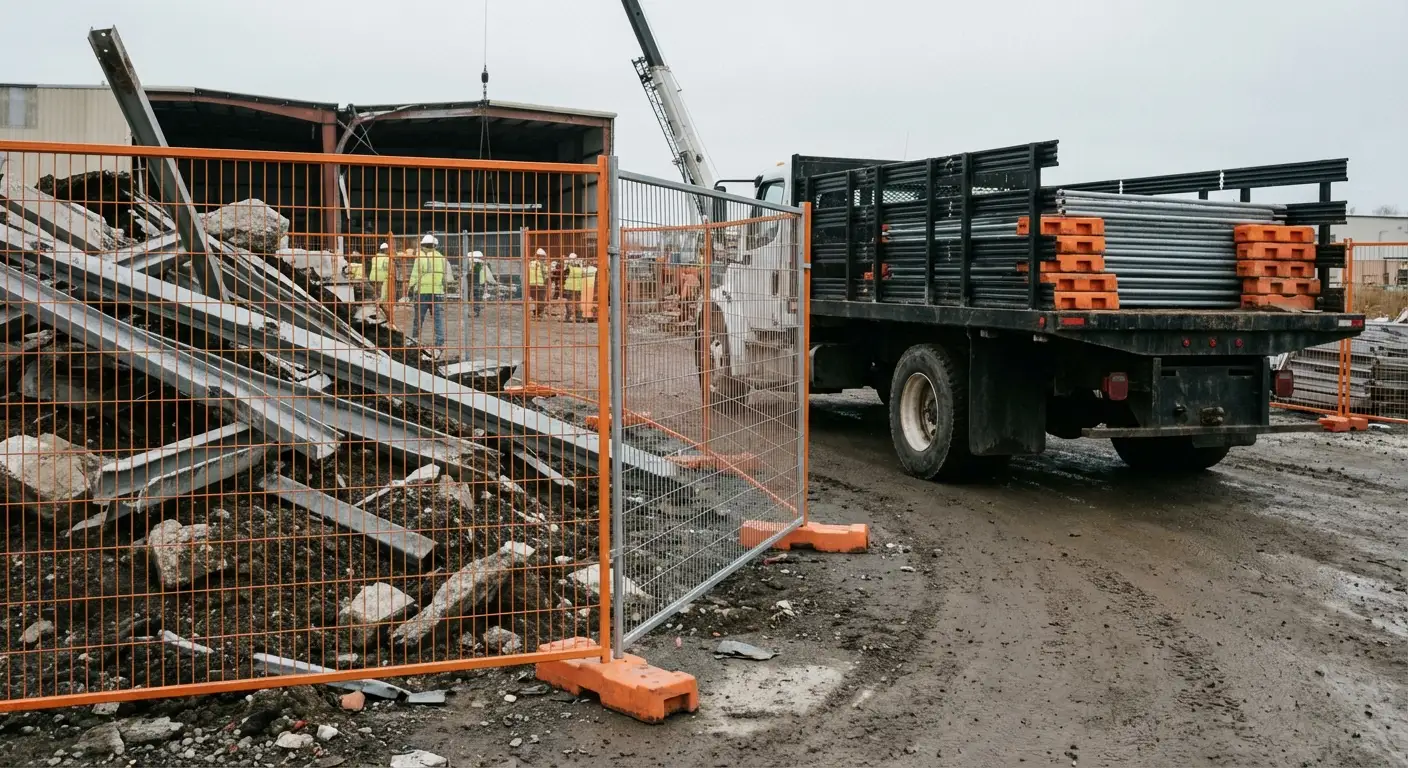
Real World ExampleAfter the '07 floods, we installed emergency fencing around damaged sites in Spring Lakes to prevent looting while repairs began.
-
2
Electronic systems complement—but don’t replace—physical boundaries
Cameras and sensors lack stopping power. We integrate fencing with existing surveillance by creating clear, uncluttered perimeters that improve sightlines for monitoring equipment, especially in dense areas like Northgate Crossing near the Grand Parkway.
Real World ExampleOur chain-link panels provide open visibility so security cameras cover more ground without blind spots.
-
3
Rapid deployment matters in volatile conditions
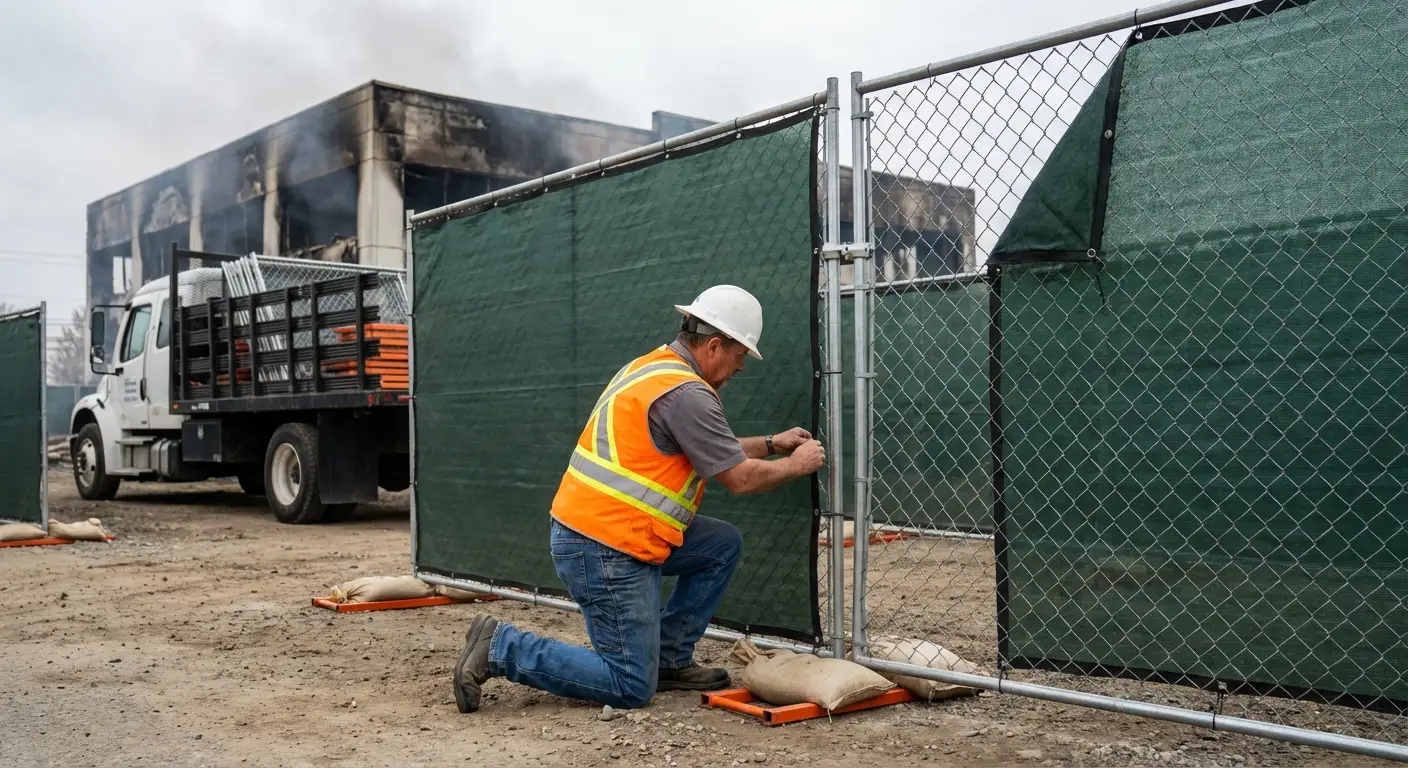
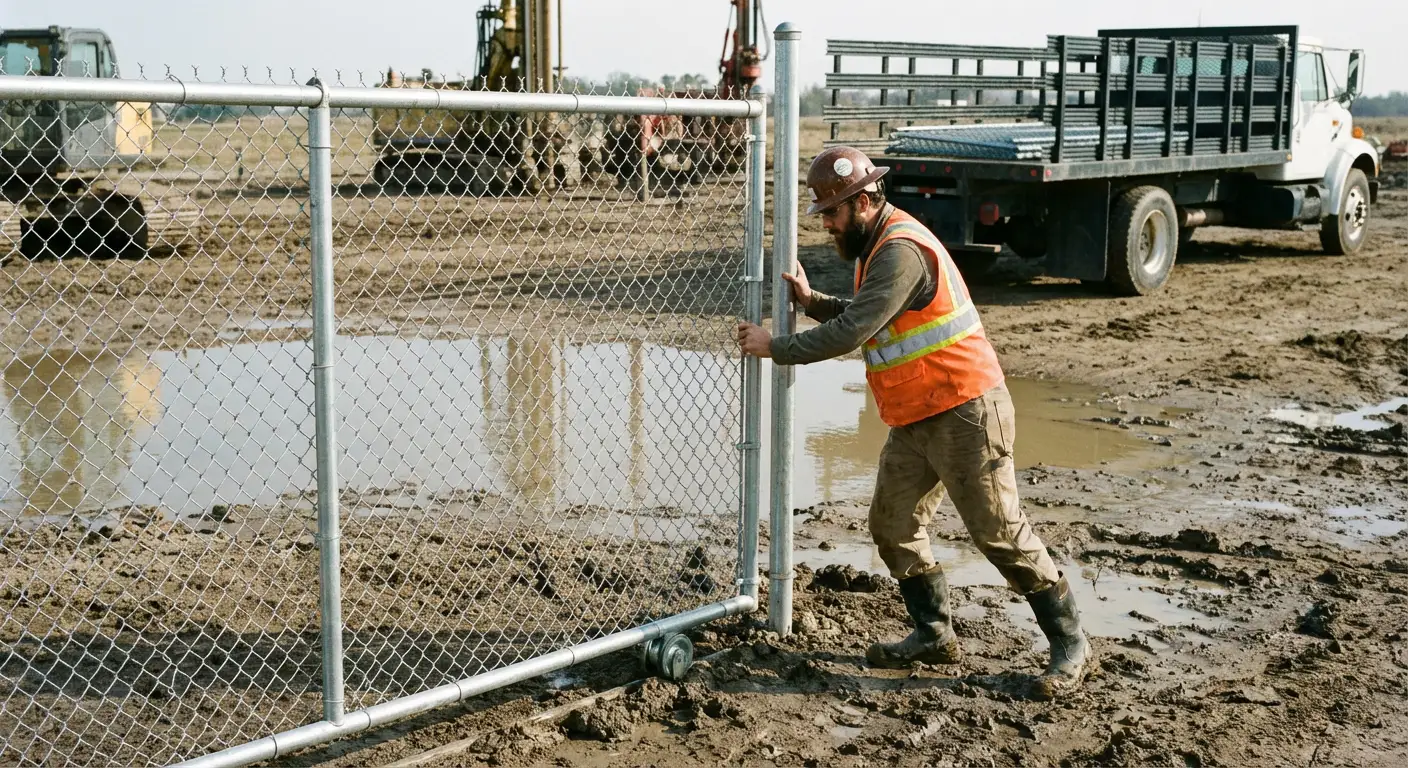
Spring’s 102 days above 90°F and sudden downpours demand quick, stable setups. Our crew uses wheel-assisted gates and interlocking hooks to install secure fencing within hours—not days—minimizing exposure during site transitions or emergencies.
Real World ExampleWe secured a Cypresswood construction site in under 4 hours using wheel-assisted gates and interlocking hooks before a forecasted thunderstorm.
-
4
Ground stability dictates long-term effectiveness
Even low flood risk areas like Spring require proper base anchoring. We calculate root zone depth and use concrete-steel bases where needed, preventing fence blow-over during high winds common along the I-45 corridor.
Real World ExampleNear Cypresswood, we applied root zone calculation and concrete-steel bases to withstand seasonal gusts.
We install only code-compliant, OSHA-safe fencing designed for Spring’s specific climate and terrain—never substituting cameras for concrete posts or sensors for steel mesh.
Why Physical Fencing Outperforms Electronics in Spring's Climate
After Old Town Spring businesses got hit with repeat vandalism last summer, our crew installed chain-link panels with wind-resistant bracing – still standing through three thunderstorms that knocked out nearby cameras. Unlike DIY electronic setups, our steel-based systems don't fail when Meyer Park floods or summer heat fries circuit boards. For Spring Lakes properties, we combine privacy screens with motion lights – physical barriers work 24/7 without grid dependence.
Site Assessment Checklist
- Physical barriers deter intruders immediately with visible presence
- Electronic systems require power and maintenance to stay operational
- Combining both methods creates layered security for high-risk sites
Compare Physical Fencing and Electronic Surveillance Systems
Integrate physical barriers with electronic monitoring to secure Spring, TX job sites against unauthorized access and site breaches.
Serving construction sites throughout the Spring, Texas area.
Physical Fencing vs Electronic Surveillance for Spring, TX Site Boundaries
Spring, TX sites near Spring Creek Greenway use fencing for control and cameras for monitoring across heat, rain, and access points.
When does physical fencing make more sense than cameras in Spring, TX sites?
Physical fencing helps on post-2000 sites around Grand Parkway (99) where access points need clear control. In Spring Lakes and Northgate Crossing, a fence marks the boundary, slows casual entry, and gives crews a fixed line during deliveries. Cameras still help, but they do not stop someone at the edge.
Where do electronic cameras fit better than fence-only security near Spring Creek Greenway?
Electronic surveillance works well along the Spring Creek Greenway edge where long sightlines and low flood risk still leave open paths. In Cypresswood, cameras help watch blind corners, trailer yards, and after-hours movement. They record activity, but they do not block vehicles, foot traffic, or wildlife crossings.
How does Spring, TX heat affect fencing and surveillance equipment?
Spring’s 102 days above 90F put strain on camera housings, cabling, and power supplies. Around Northgate Crossing and Cypresswood, direct sun can wash out lenses and shorten battery backup life. Physical fencing needs less electrical support, while surveillance needs shade planning, conduit protection, and regular lens cleaning.
What works better during heavy rain in the Spring, TX flood zone?
Spring’s 19.6 inches of annual precipitation and low flood zone still create drainage issues near Spring Creek Greenway. Physical fencing stands up if posts are set above soft ground and away from washout points. Cameras at ground level can lose visibility in rain, glare, or standing water near access roads.
How do fenced boundaries help with OSHA-style site control in Spring Lakes?
In Spring Lakes, a fence gives workers and visitors a visible boundary for staging, pedestrian paths, and equipment laydown. That helps reduce trespass and confusion at post-2000 sites near Grand Parkway (99). Cameras document movement, but fencing supports day-to-day control where crews need a clear line.
What is the main difference between fence deterrence and camera evidence in Cypresswood?
In Cypresswood, fencing acts as a physical barrier that changes how people enter a site. Cameras collect evidence after entry or damage. For boundary work near Spring Creek Site Fencing projects, the fence defines ownership and access, while surveillance supports review, incident logs, and overnight monitoring.