
Spring Root Zone Calculation for TPZ Fencing Compliance Guide
Spring Creek Site Fencing provides precise Root Zone Calculation for TPZ Fencing to ensure local compliance. From Old Town Spring to Lexington Woods, we help contractors navigate municipal requirements near the Grand Parkway. Given Spring's high cooling degree days and heavy precipitation, protecting tree health during construction is vital for maintaining site stability and avoiding costly environmental fines.
Root Zone Calculation Essentials for TPZ Compliance in Spring, TX
In Spring, TX, accurate root zone calculation isn’t just best practice—it’s a compliance necessity, especially after the 2007 floods showed how quickly soil saturation can compromise both trees and temporary fencing. We measure from the trunk outward, using DBH to set the protected radius, then position our tree protection zone hardware beyond that boundary. Our crew accounts for local conditions like clay-heavy soils and high heat, ensuring stable, non-invasive setups near sites like the Pearl Fincher Museum of Fine Arts. This approach aligns with municipal guidelines and protects mature trees during construction around post-2000 developments near the Grand Parkway.
Calculation Steps
- Verify tree diameter at breast height (DBH) to determine minimum root zone radius per local arborist guidelines
- Account for Spring’s 19.6 inches of annual rainfall when calculating soil saturation impact on TPZ stability
- Install fence bases outside the calculated root protection zone to avoid compaction during TPZ fencing setup in Old Town Spring, Lexington Woods, and Spring Lakes
| Factor | Spring, TX Consideration |
|---|---|
| Annual Precipitation | 19.6 inches – affects soil stability and root sensitivity |
| High-Temperature Days | 102+ days above 90°F – increases evaporation, stressing root systems |
| Frost Days | 10 days below 32°F – minimal freeze-thaw impact on root zones |
Root Zone Calculation for TPZ Fencing in Spring, TX
Root Zone Calculation is a quantitative assessment method that establishes the mandatory protective radius around trees on construction sites. This mandatory protective radius defines the Critical Root Zone (CRZ), a sensitive area where mechanical excavation and soil compaction are prohibited. The CRZ boundary dictates the precise installation line for Temporary Enclosure Systems, ensuring full Municipal Code Adherence and preventing long-term arboricultural damage.
Key Terminology
- TPZ radius
- The measured distance from the trunk that sets the fence line for root protection around trees in Lexington Woods and Spring Lakes.
- root flare
- The widened base where roots begin; crews keep fencing outside this area near Northgate Crossing lots and post-2000 builds.
- critical root zone
- The soil area that feeds stability and water uptake, used to set TPZ limits near Planet Ford Stadium work zones.
- tree protection fence
- Temporary barrier installed before grading or staging to keep trucks, pallets, and foot traffic out of protected root soil.
- dripline
- The outer canopy edge used as a reference point when field staff map protection limits in Spring Creek Site Fencing jobs.
- root compaction
- Soil pressure from repeated traffic that cuts oxygen flow and is checked closely during fence layout in low flood areas.
In Simple Terms
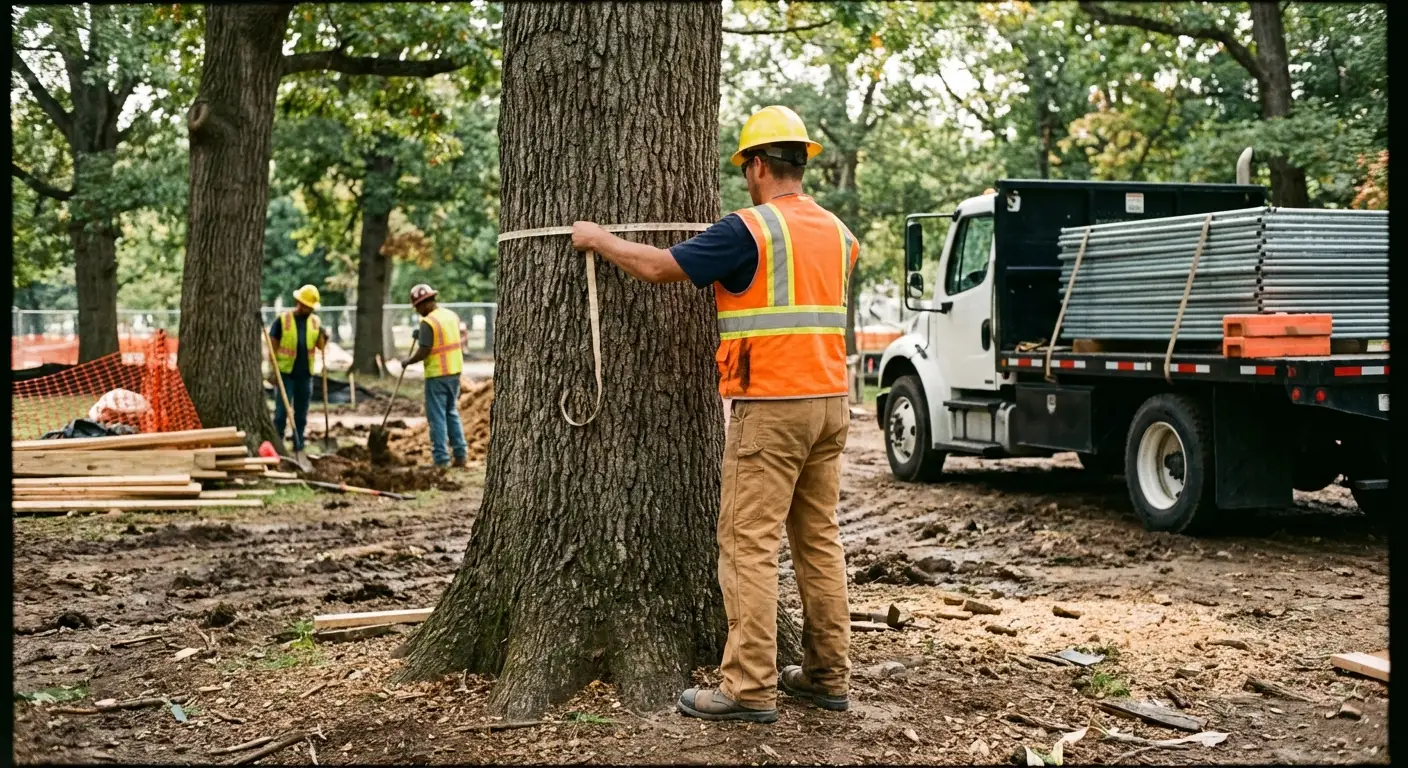
Root zone calculation starts with the trunk size, species, and site layout, then sets the temporary protection fence outside the zone where roots carry water and stability. In Spring, TX, crews working near Lexington Woods, Spring Lakes, and Northgate Crossing measure the area before posts go in, then keep access routes, spoil piles, and equipment out of that space. The fence line also has to account for the ground around post-2000 construction, where compacted subsoil and utility trenches near Grand Parkway (99) lots can push the barrier farther out. Spring Creek Site Fencing handles that layout for TPZ jobs, including tree protection zones, chain link panels, and emergency fencing around active work areas. For local scheduling or site questions, use Spring Creek Site Fencing in Spring or review tree protection ordinances in Spring and tree protection zones in Spring Lakes before layout starts.
Root Zone Calculation and TPZ Compliance Standards
This guide details technical requirements for calculating Tree Protection Zones to ensure compliance with local Spring, TX arboricultural standards.
| TPZ Radius Calculation Method | Critical Root Zone (CRZ) measurement |
|---|---|
| Soil Stability Assessment | $150-$300 per site |
| Tree Protection Fencing Material | $450-$850 per installation |
| Root Zone Boundary Delineation | $200-$400 per unit |
| Compliance Inspection Fee | $350-$550 per assessment |
| Spring, TX Environmental Compliance | Standard TPZ protocol |
| Signage Interval | Every 30 linear feet |
Root Zone Calculation for TPZ Fencing in Spring, TX — Part 2
Ensure compliance with local tree protection regulations.
Common Failures in Root Zone Protection
I've spent years seeing beautiful trees die because a fence line was placed just six inches too close. Protecting the root zone requires more than just a tape measure; it requires real field knowledge.
Guessing the Critical Root Radius
We've seen crews eye-ball the distance from a trunk and drive posts right through major feeder roots. This kills the tree's ability to drink, especially during our brutal 102-degree summer days in Northgate Crossing.
We use specific tree protection zones based on actual trunk diameter measurements.
Ignoring Soil Compaction from Heavy Equipment
Even if you stay outside the fence line, driving heavy machinery near the zone crushes air pockets in the soil. This suffocates the roots and leads to slow decline that owners won't notice until it's too late.
Our team implements SWPPP dust compliance and strict vehicle routing to protect soil structure.
Using Improper Post-Driving Methods
Using a heavy vibratory hammer too close to the drip line creates shockwaves that sever fine root hairs. It's a common mistake on jobs near Old Town Spring where heritage trees are everywhere.
We opt for post-driven fence setups that minimize ground vibration and lateral soil displacement.
Miscalculating the Drip Line vs. Root Zone
People think the canopy edge is the limit. That's wrong. The most active feeder roots often extend well beyond the leaves. If you fence too tight, you're cutting off the tree's primary nutrient source.
We consult surveying vs fencing data to ensure the entire root spread stays clear.
Failing to Account for Slope and Runoff
On sites with elevation changes, water runoff patterns change once you install a barrier. This can starve the root zone of the 19.6 inches of annual precipitation these trees need to survive.
We check tree protection ordinances and site grading to manage water flow around the zone.
Root Zone Calculation for TPZ Fencing: Compliance Guide
At Spring Creek Site Fencing, we know that protecting tree roots during fencing means more than just measuring distances. Our approach blends local climate realities, soil conditions, and root growth patterns to calculate the Tree Protection Zone (TPZ) accurately. We work closely with site conditions in Spring, TX, including neighborhoods like Old Town Spring and Lexington Woods, ensuring compliance with regulations while preserving mature trees. This hands-on precision safeguards trees from damage during construction and supports sustainable site development.
-
Measure Beyond the Trunk Diameter
We calculate the TPZ radius by considering the tree’s diameter at breast height (DBH), extending protection beyond the root flare to shield critical roots from fencing impacts.In PracticeFor a 12-inch DBH oak near Atkinson Farms, we set a TPZ radius of at least 12 feet to avoid root damage during site work.
-
Account for Local Climate Stressors
Spring’s 3157 cooling degree days and frequent heat spikes influence root growth and soil moisture. We factor these when setting TPZ boundaries to maintain tree health under hot, dry conditions.In PracticeIn neighborhoods like Spring Lakes, we adjust fencing layout to protect roots from compaction during summer months when heat stress peaks.
-
Use Physical Barriers That Preserve Soil Integrity
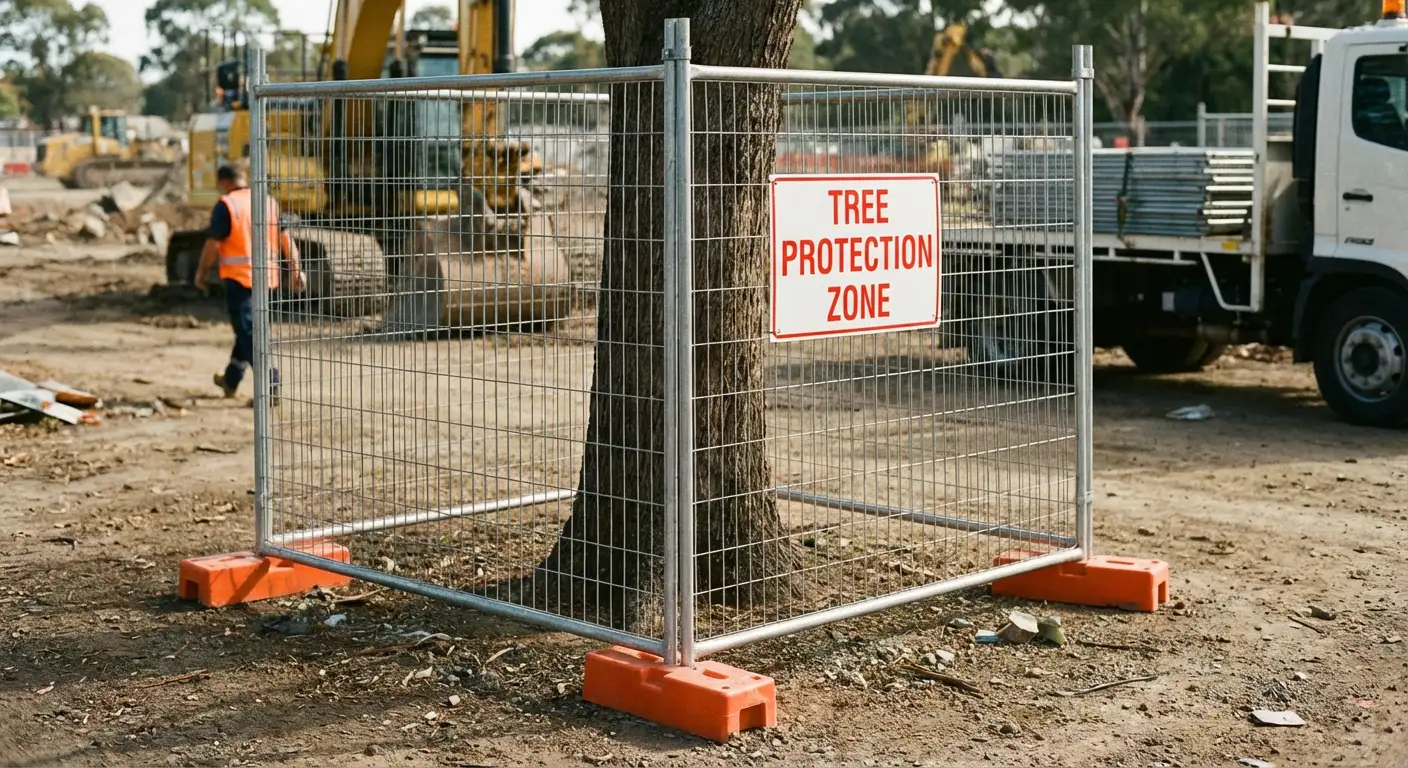
Temporary fencing must prevent root zone intrusion without disturbing soil structure. We prefer fencing with concrete-steel bases to avoid driving stakes into sensitive root areas.In PracticeAt a commercial site near the Grand Parkway, our crew installed TPZ fencing with concrete bases to shield mature trees during heavy equipment operation.
-
Adapt to Site-Specific Conditions
We assess each site’s flood risk, soil type, and tree species, adjusting TPZ fencing placement accordingly to comply with local ordinances and avoid root damage.In PracticeIn flood-prone zones of Old Town Spring, we expanded fencing zones to accommodate saturated soil conditions that increase root vulnerability.
We commit to precise root zone calculations that respect local tree species and site variables, ensuring TPZ fencing meets all compliance standards. Our crew adapts methods for conditions unique to Spring’s climate and soil, minimizing tree stress and supporting project longevity.
Root Zone Calculation and TPZ Compliance Standards — Part 2
Field protocols for calculating critical root zones and installing TPZ fencing to meet Spring, TX site development requirements.
How does the TPZ radius change in Cypresswood?
Tree Protection Zone calculations in Cypresswood depend on the species' critical root zone. Field crews measure from the trunk center to the drip line. This prevents soil compaction near established root systems during site preparation.
What impact does high precipitation have on TPZ fencing?
With 19.6in of annual precipitation in Spring, TX, fencing must withstand soil saturation. Crews install silt fencing alongside TPZ barriers to manage runoff near the Barbara Bush Branch Library site boundaries.
Does the Grand Parkway construction affect root zone standards?
Development near the Grand Parkway (99) requires strict adherence to municipal tree preservation codes. Site managers establish TPZ boundaries to protect remaining vegetation from heavy machinery vibration and grade changes.
How do temperature fluctuations affect fencing stability?
Spring, TX experiences 102 days above 90F. Heat expansion affects temporary fencing tension. Crews monitor TPZ barriers to ensure they remain upright despite soil drying and shifting during extreme heat cycles.
What are the TPZ requirements in Old Town Spring?
Historic zones like Old Town Spring require manual root zone mapping. Hand-digging often replaces heavy machinery to avoid damaging shallow root structures. This method maintains compliance with local preservation standards.
How is flooding addressed in Lexington Woods TPZ setups?
Lexington Woods falls within a low flood zone. TPZ fencing installation includes stabilizing posts to prevent washout during heavy rain. We prioritize barrier integrity to prevent sediment from entering protected root zones.
TPZ Root Zone Fencing Compliance in Spring
Calculate root zone distances for TPZ fencing to meet local Spring, TX regulations. Ensure proper barrier placement around protected trees.
Local Spring fencing experts since 2015. OSHA-compliant installations.